


Nurturing Schools Programme
Since 2025, BCJS has been part of The National Nurturing Schools Programme, a whole-school approach that supports children’s emotional wellbeing, social development and learning. It is based on research into child development and attachment, and helps schools create a safe, inclusive and supportive environment where every child can thrive.
The approach is guided by six key principles of nurture, which underpin our daily practice, relationships and policies across the school.
The Six Principles of Nurture
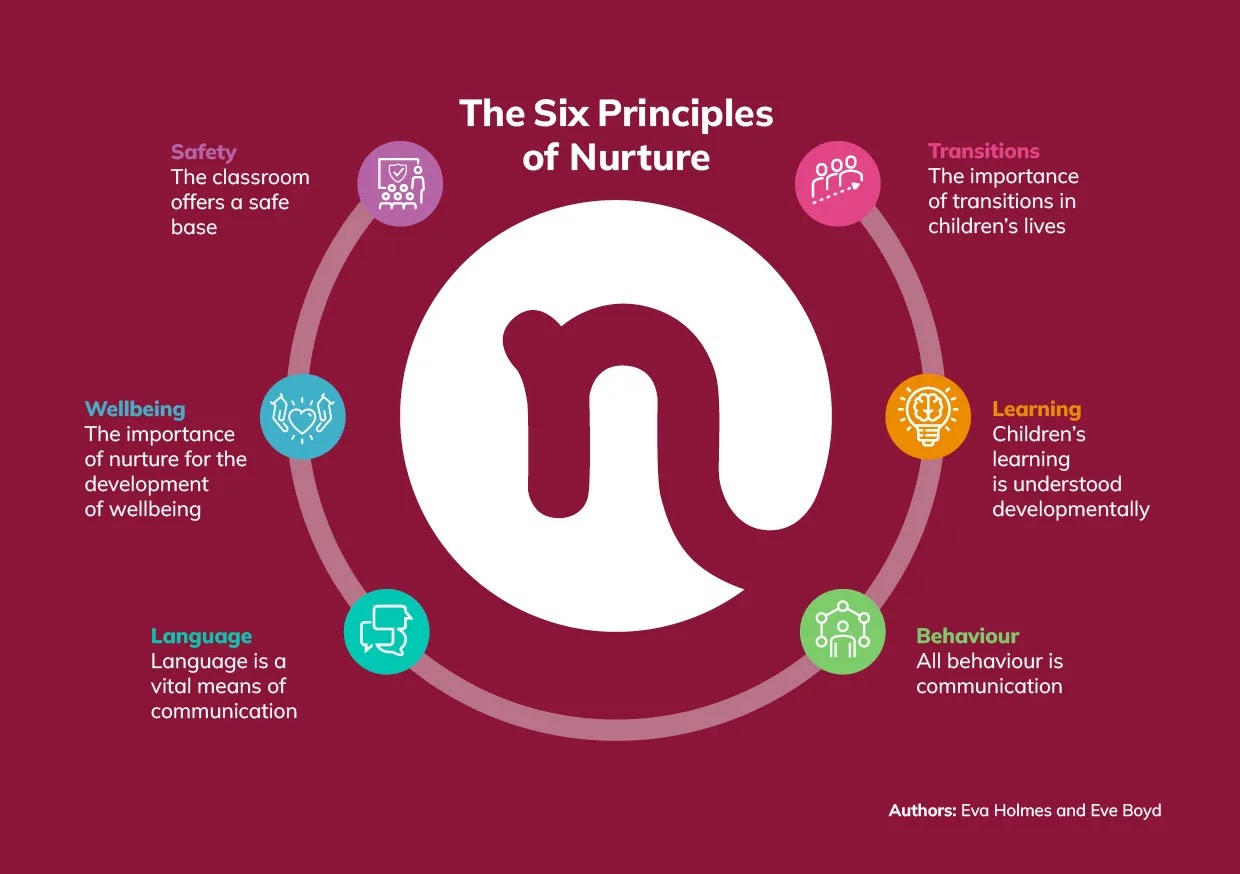
1. Children’s learning is understood developmentally
We recognise that children develop at different rates, emotionally, socially and academically. By understanding each child’s stage of development, we can provide appropriate support, challenge and encouragement, helping them to make progress in a way that is right for them.
2. The classroom offers a safe base
Children learn best when they feel safe, secure and valued. Our classrooms provide a welcoming, consistent and supportive environment, where positive relationships help children feel confident to explore, take risks in learning and develop independence.
3. The importance of nurture for the development of wellbeing
Positive relationships, encouragement and recognition of effort help children develop confidence and self-worth. We celebrate achievements, big and small, and support children to build resilience, independence and pride in themselves.
4. Language is a vital means of communication
We support children to develop emotional literacy by encouraging them to talk about their feelings, experiences and needs. Through modelling, discussion and supportive interactions, we help children build the language skills they need to express themselves and understand others.
5. All behaviour is communication
We understand that behaviour often reflects underlying feelings, needs or experiences. By responding with empathy and curiosity, rather than punishment, we aim to identify the cause of behaviours and support children to develop positive ways of coping and communicating.
6. The importance of transitions in children’s lives
Changes and transitions can be challenging for children, whether moving between classes, starting school, or experiencing changes at home. We provide additional support during these times to help children feel secure and confident, ensuring transitions are as smooth and positive as possible.
By following these principles, we create a caring and supportive school environment where every child can feel happy, safe and ready to learn.